
The Heated Rivalry Effect: What a Couples Therapist Is Seeing Women Discover About Desire
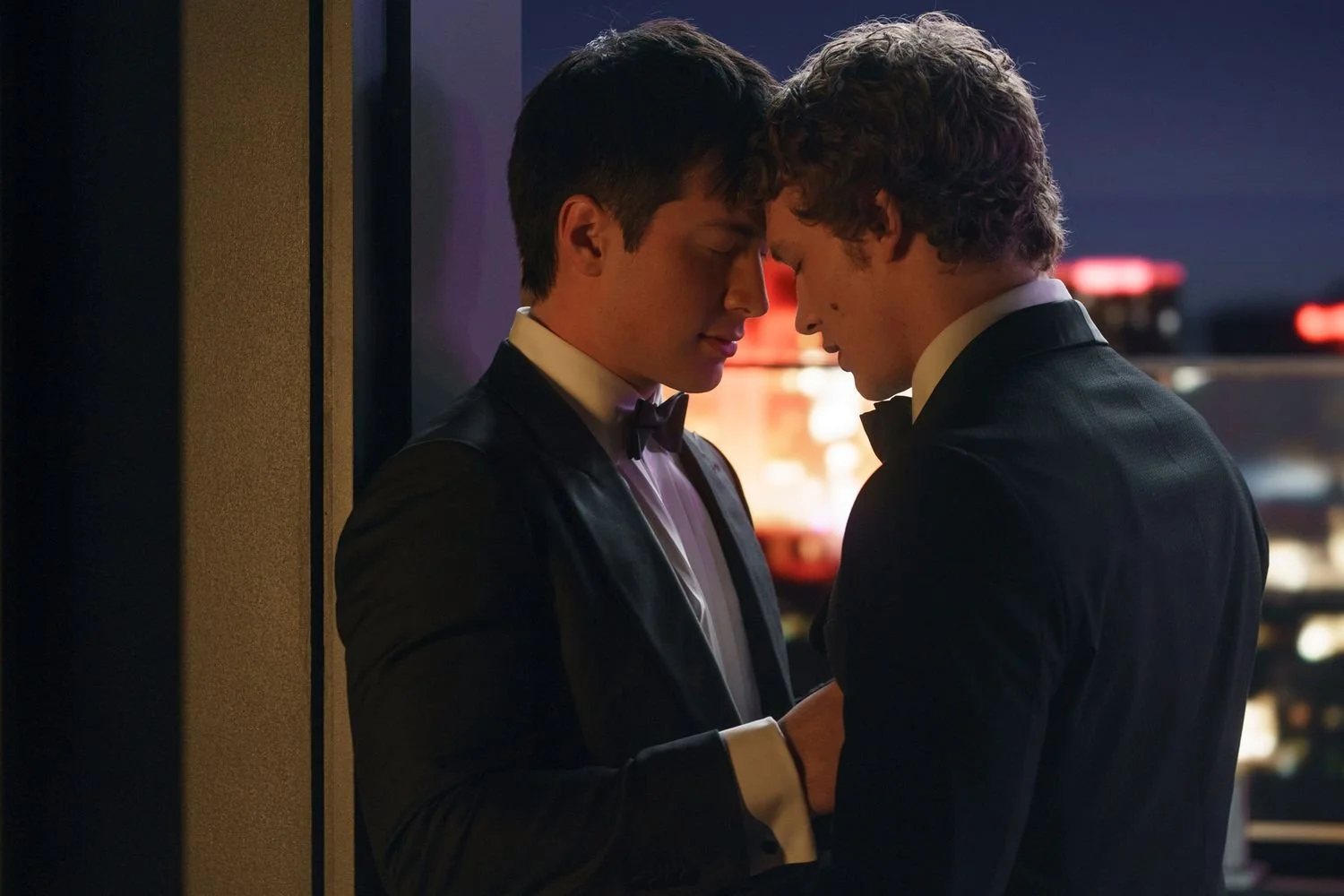
Photo credit: HBO, Heated Rivalry
Okay, okay- I know the title is a little clickbait. But hear me out.
Unless you've been living under a rock for the past several months, you've probably heard about Heated Rivalry, the breakout queer sports romance series based on Rachel Reid's Game Changers novels. The show follows Shane Hollander and Ilya Rozanov, two rival professional hockey players whose secret relationship unfolds over the course of years.
As a queer woman myself, I devoured the series in a single weekend. More than once I found myself blushing when my partner walked into the room. While Shane and Ilya's romance was captivating, I was especially moved by Scott and Kip's storyline. As someone who has experienced being in a relationship while still closeted, parts of their journey touched something younger inside of me. It felt unexpectedly healing.
But what surprised me even more happened after I finished the show.
I started noticing it in my therapy office.
Without revealing anything about individual clients, I began hearing Heated Rivalry come up organically in conversations. At first, it was from the people I expected- clients that are a part of the LGBTQ+ community. Then I noticed something I hadn't anticipated.
Many women who identify as heterosexual were just as captivated by the series, often even more so.
And while everyone's experience is different, I started noticing a few common themes.
1. Women were reconnecting with desire.
Many described finding themselves more interested in sexuality in general. Some began reading romance novels or "smut" for the first time. Others started looking for stories with similar emotional intensity.
Interestingly, it didn't seem to be just about the explicit content.
It was about longing.
Anticipation.
Emotional intimacy.
Years of unresolved tension.
Watching two people desperately want each other while navigating vulnerability, fear, and connection seemed to awaken something that had been dormant for many viewers.
As a couples therapist, I spend a lot of time talking about desire, not just sexual desire, but the experience of feeling alive, wanted, chosen, and emotionally connected. Those experiences are deeply intertwined.
2. Women were talking about sex more openly.
I also noticed that conversations about sex became easier.
Clients who had previously struggled to discuss intimacy with their partners suddenly had language for what they wanted, or at least curiosity about what they might want.
Some found themselves initiating conversations they had been avoiding for years.
Others realized they had never really explored what felt exciting or emotionally meaningful to them outside of what they believed sex "should" look like.
That kind of curiosity is often the beginning of healthier intimacy.
3. Women began noticing what was missing.
Perhaps the most interesting pattern I observed wasn't an increase in sexual desire, it was an increase in awareness.
Some women began recognizing that what they longed for wasn't simply more sex. It was more passion. More anticipation. More emotional pursuit. More intentionality.
For some, Heated Rivalry served as a mirror. It highlighted aspects of intimacy they realized had quietly faded in their own relationships—not because their relationships were "bad," but because many long-term couples gradually shift into functioning more like teammates than lovers.
Others found themselves becoming curious about their own sexuality in ways they hadn't before. They began asking questions like:
What actually turns me on?
What kind of touch feels good to me?
What do I enjoy outside of what I've always done?
Have I ever really shared those answers with my partner?
As a couples therapist, I see this kind of curiosity as a healthy sign. Curiosity is often the first step toward building a richer intimate relationship.
Why this show?
I don't think Heated Rivalry is successful simply because it's a queer romance.
I think it's successful because it portrays emotional vulnerability in a way we don't often see.
The characters are powerful, competitive, emotionally guarded men who slowly learn to communicate, repair, and prioritize connection over image. The physical chemistry is undeniable, but what keeps viewers invested is the emotional safety they gradually build together.
Ironically, many women may be finding in a relationship between two men the kind of emotional intimacy they've been craving all along.
The Research Actually Supports This
One of the most encouraging findings in relationship research is that couples don't necessarily need to have more sex to improve their intimate relationship, they often need to create more space to talk about it.
A large meta-analysis examining 93 studies and nearly 40,000 individuals found that couples who communicate more openly and effectively about their sexual relationship report higher levels of both relationship satisfaction and sexual satisfaction. Interestingly, the quality of those conversations appeared to matter more than simply how often couples talked about sex.
Other research has found that greater sexual communication is associated with:
higher overall relationship satisfaction
greater sexual satisfaction for both partners
increased orgasm frequency for women
greater comfort expressing sexual preferences and desires
This does not necessarily mean that talking about sex directly causes these outcomes, as much of the research is correlational. However, it does suggest something important: healthy couples tend to create space for honest, vulnerable conversations about intimacy.
And that's what I found so fascinating about the Heated Rivalry phenomenon.
Whether the show itself is the catalyst or simply the conversation starter, I noticed many women beginning to ask questions they had never felt permission to ask before. They became more curious about their own desire, more willing to communicate their preferences, and more aware of areas where passion or playfulness had quietly faded into the background.
What This Means for Relationships
Some partners may understandably wonder why their spouse suddenly seems so invested in a television show.
In my observation, it's usually not because they want a hockey player.
It's because the story reconnects them with something deeply human:
The feeling of longing.
The experience of being pursued.
The vulnerability of being truly seen and desired.
Stories have always helped us discover parts of ourselves. Sometimes they entertain us. Sometimes they challenge us. Sometimes they give us language for experiences we couldn't quite name.
If Heated Rivalry has sparked more conversations about desire, intimacy, and emotional connection in relationships, I don't see that as something to fear.
As a couples therapist, I see it as an invitation.
An invitation to become curious about your own relationship.
To ask yourself, and your partner, not only, "How often are we having sex?" but:
"Do we still pursue each other?"
"Do we feel emotionally safe with one another?"
"Do we feel chosen?"
Because those questions are often where deeper intimacy begins.
References
Byers, E. S. (2011).
Beyond the birds and the bees and was more than sex: The importance of sexual communication in intimate relationships. Canadian Psychology/Psychologie canadienne, 52(1), 24–32.
https://doi.org/10.1037/a0022046
Mallory, A. B., Stanton, A. M., & Handy, A. B. (2019).
Couples’ sexual communication and sexual satisfaction: A meta-analysis. Social Psychological and Personality Science, 10(4), 471–483.
https://doi.org/10.1177/1948550618764635
