
The One Skill I’d Teach Every Couple
My dad once asked me, “What is one thing you would teach every couple in the world?” The answer came to me right away: emotion regulation and validating responses.
These two skills are the foundation of healthy communication and relationship repair. Without them, couples often get stuck in cycles of defensiveness, misunderstanding, or escalation. With them, even tough conversations can feel safer and more productive.
Why Emotion Regulation Matters
When we’re emotionally overwhelmed, our nervous system goes into survival mode. John Gottman refers to this as flooding, a physiological state where our heart rate spikes, stress hormones surge, and our brain struggles to process information clearly (Gottman, 1999).

I know, I know. It’s easy to point the finger at our partner. This kind of invalidating response only leads to more emotional dysregulation. This gets us nowhere, but it’s so natural for us to be defensive.
When we’re flooded, we’re far more likely to lash out, shut down, or misinterpret our partner’s words. This is why emotion regulation is crucial. It doesn’t mean ignoring or suppressing emotions, but rather staying grounded enough to choose how to respond, rather than letting our emotions choose for us.
Examples of emotion regulation might look like:
Taking a pause before responding.
Noticing your body cues (tension, racing thoughts, clenched jaw) and calming yourself with a breath or break.
Reminding yourself, “I can slow this down. I don’t need to win, I need to connect.”
The Power of Validation
Once we’re regulated, we can turn to the second skill: validation.
Validation is not about agreeing with your partner, but about acknowledging their experience. It’s saying, “I hear you, I see why you feel that way, and your emotions make sense.”
This step can’t be skipped- when people feel invalidated, they often push harder to be understood, which escalates conflict. But when someone feels heard, the intensity often lowers, and real problem-solving becomes possible.
For example:
Instead of: “You’re overreacting. It’s not a big deal.”
Try: “I can see this really matters to you. That makes sense, you want to feel considered.”
Putting It Together
In my work with couples, I often share a diagram (see below) that illustrates these two pieces: regulation and validation. When both partners learn these skills, conflicts feel less like battles and more like opportunities for connection.
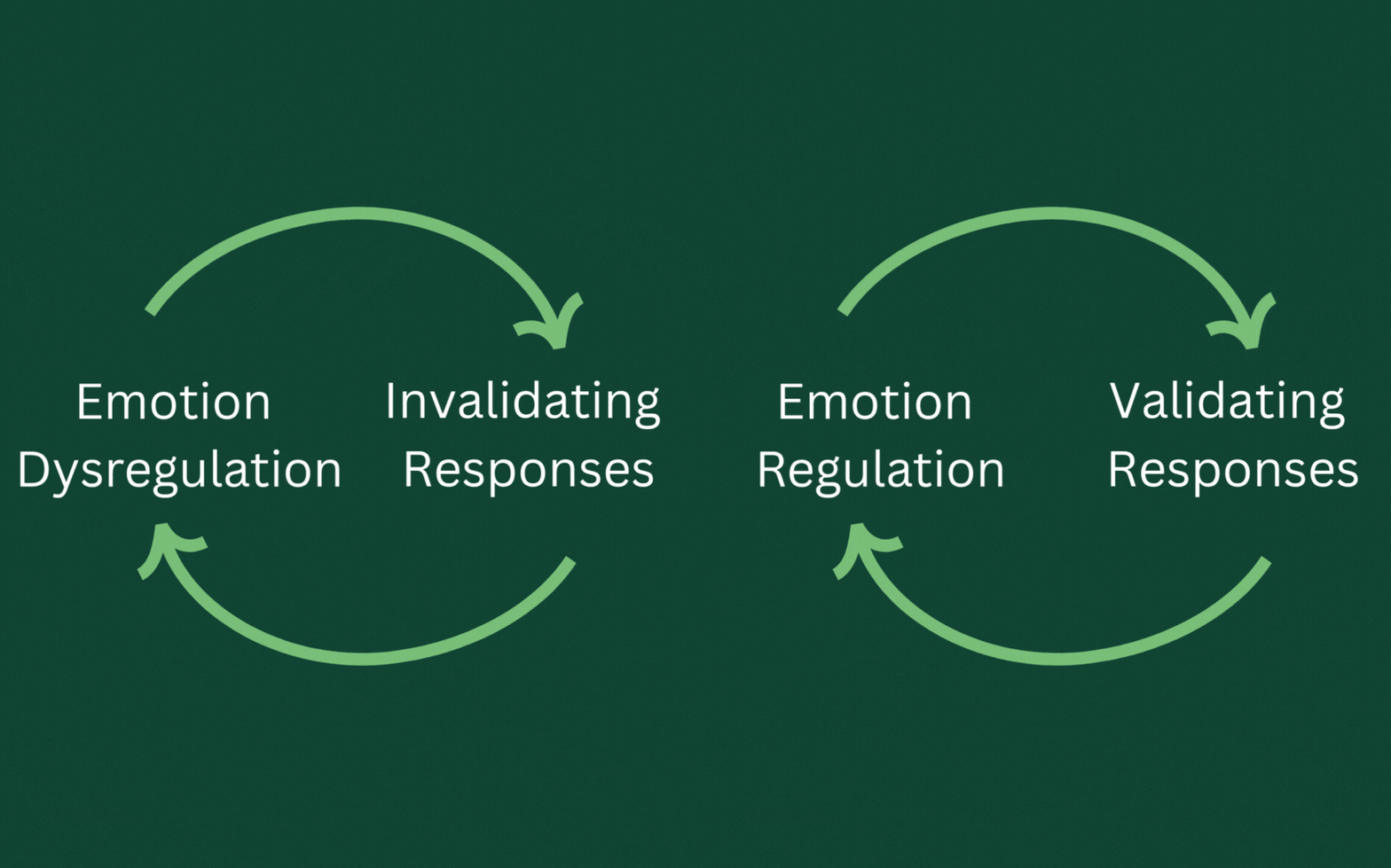
The image shows the two cycles described by Daniel Frezetti, how emotion dysregulation and invalidating responses is a cycle, juxtaposed with emotion regulation and validating responses being it’s own cycle.
As Daniel J. Frezetti describes in The High Conflict Couple, practicing regulation and validation can transform patterns of criticism, defensiveness, and withdrawal into moments of understanding and repair (Frezetti, 2006).
A Gentle Reminder
These skills aren’t about perfection; they’re about progress. No one regulates or validates perfectly every time. But each effort to pause, calm yourself, and validate your partner builds trust and safety in the relationship.
If there’s one thing I wish every couple in the world could practice, it’s this: regulate your emotions, and then respond with validation. That’s where lasting connection begins.
References
Frezetti, D. J. (2006). The High Conflict Couple: A Dialectical Behavior Therapy Guide to Finding Peace, Intimacy, and Validation. New Harbinger Publications.
•Gottman, J. M., & Silver, N. (1999). The Seven Principles for Making Marriage Work. Crown.
